
What happens after
you approve.

The part nobody shows you is exactly where money is lost: the washing, the packing, the lashing and the loading. Here it is, filmed step by step, the way we do it.

The process, on video

One SAGARA machine,from the factory to your floor.

We follow a single machine — a fibre laser cutter built under our own brand — from the end of assembly to the sealed crate. Every video is ours.

Step 01

The finished machine, checked end to end

Before anything is touched we walk the whole machine: frame, covers, cutting bed, head and cable chain. What isn't checked here gets discovered at destination.

This one carries our brand, so we're the ones who answer if it fails. That changes how you look at it.

Own-brand product
Step 02

A real cutting test, not a demo

We cut actual material, at the thickness and power the client will use. We check the edge, the accuracy and how the head behaves once hot.

If the cut isn't clean, the machine doesn't get packed. It's adjusted and tested again.

Tested before packing

Step 03

The cut, up close

Sheet metal, a clean edge and parts coming out whole. This is the test that decides whether the machine leaves the factory or stays for adjustment.

It's the difference between buying a spec sheet and buying a machine you already watched working.

A real cut, not a demo

Step 04

Fragile parts get wrapped first

Screens, head, rails and painted surfaces are protected before the machine moves an inch. The blue film isn't decoration — it's what stops it arriving scratched.

It's the step a supplier in a hurry skips, and it explains half the damage that arrives at destination.

Protection before moving

Step 05

Full wrap and bracing

The machine is wrapped completely, chocked and secured to its base. A loose machine shifts at sea and arrives out of square — and a cutter out of square doesn't cut straight.

Loose parts and accessories travel in a separate box, numbered on the packing list.

Step 06

Marked crate and departure

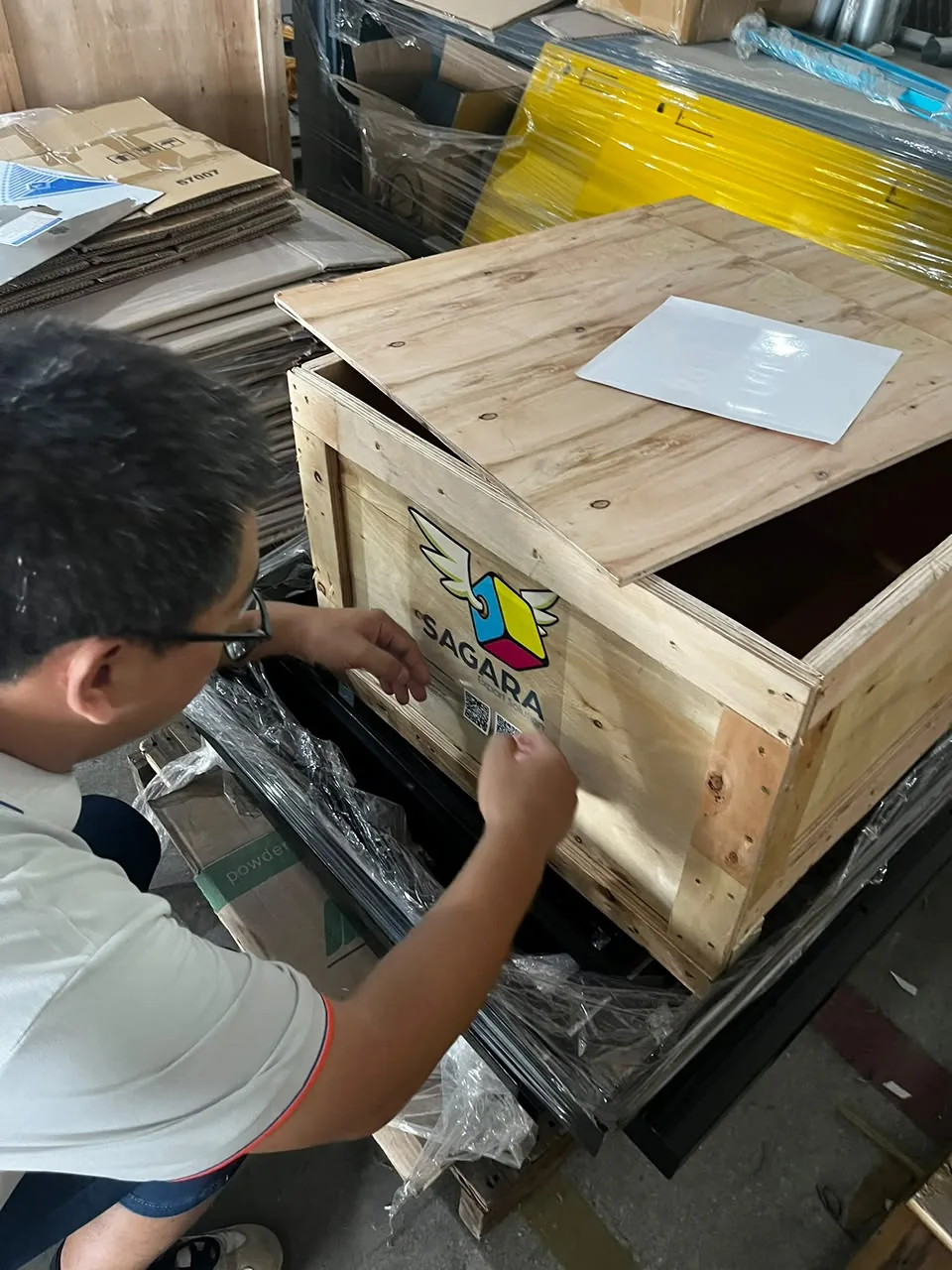
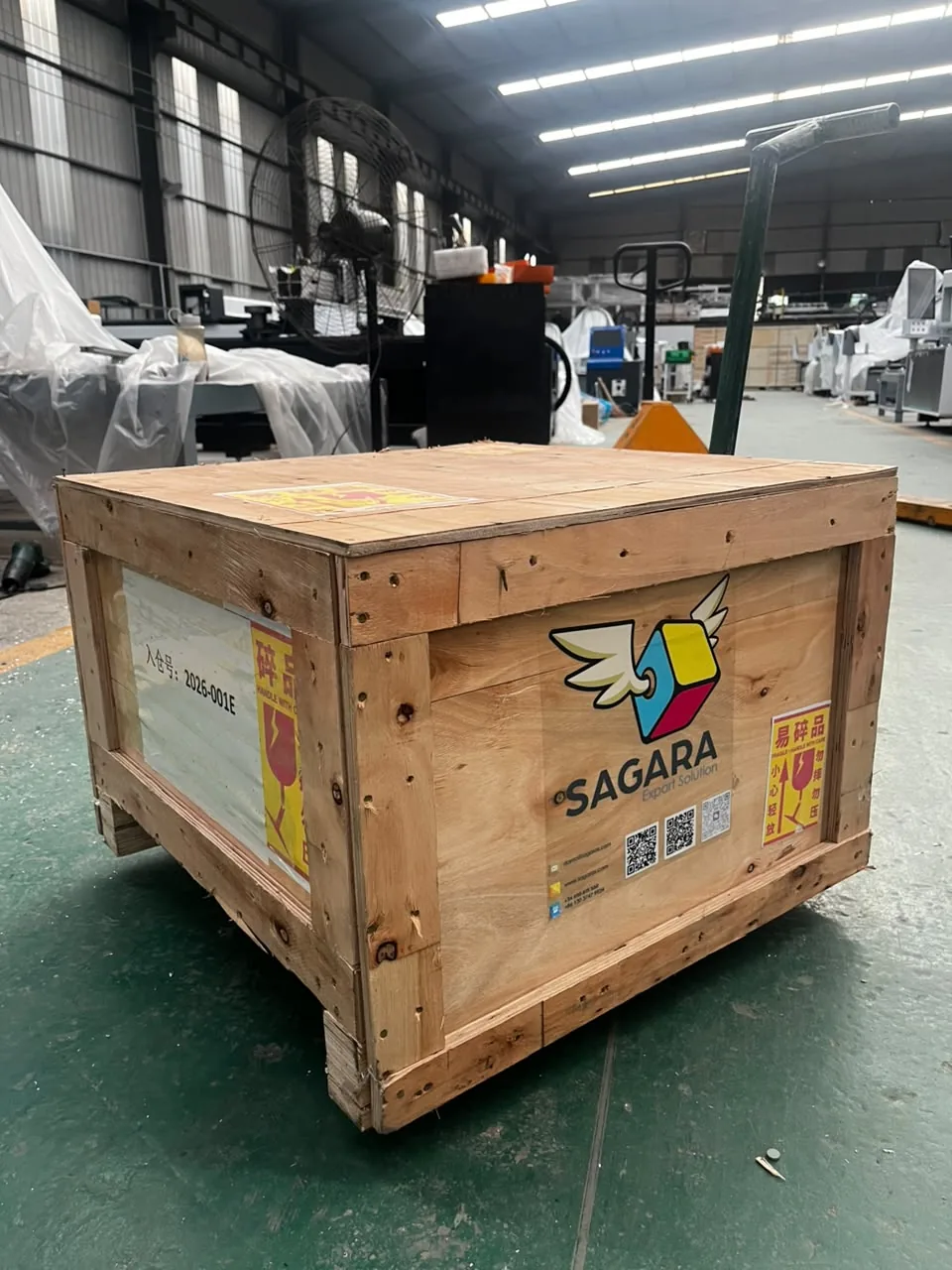
A custom crate is built in treated timber and marked. Our crates carry the SAGARA logo because we answer for what's inside.

Invoice, packing list and certificate of origin leave with the cargo. From there, tracking to your port.

ISPM-15 treated timber

Who does it

We don't send a third party
to look on our behalf.

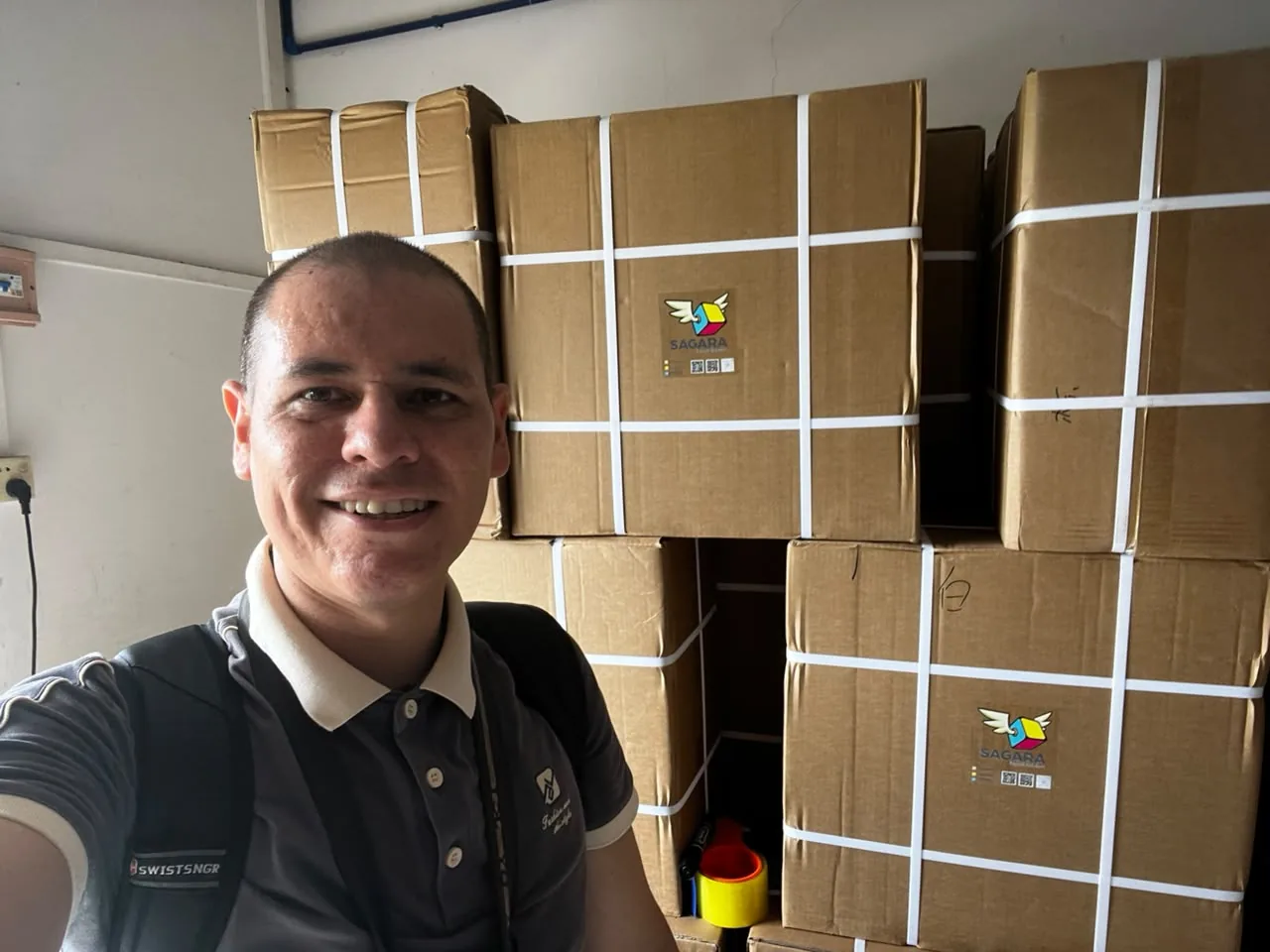
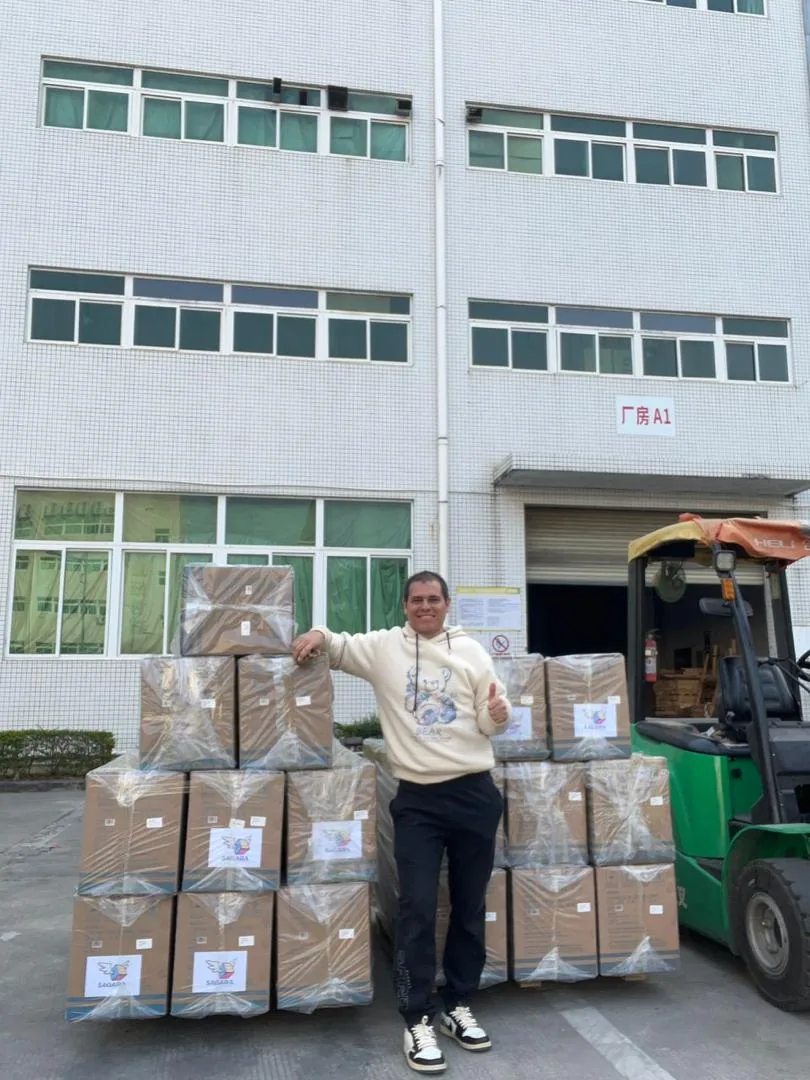
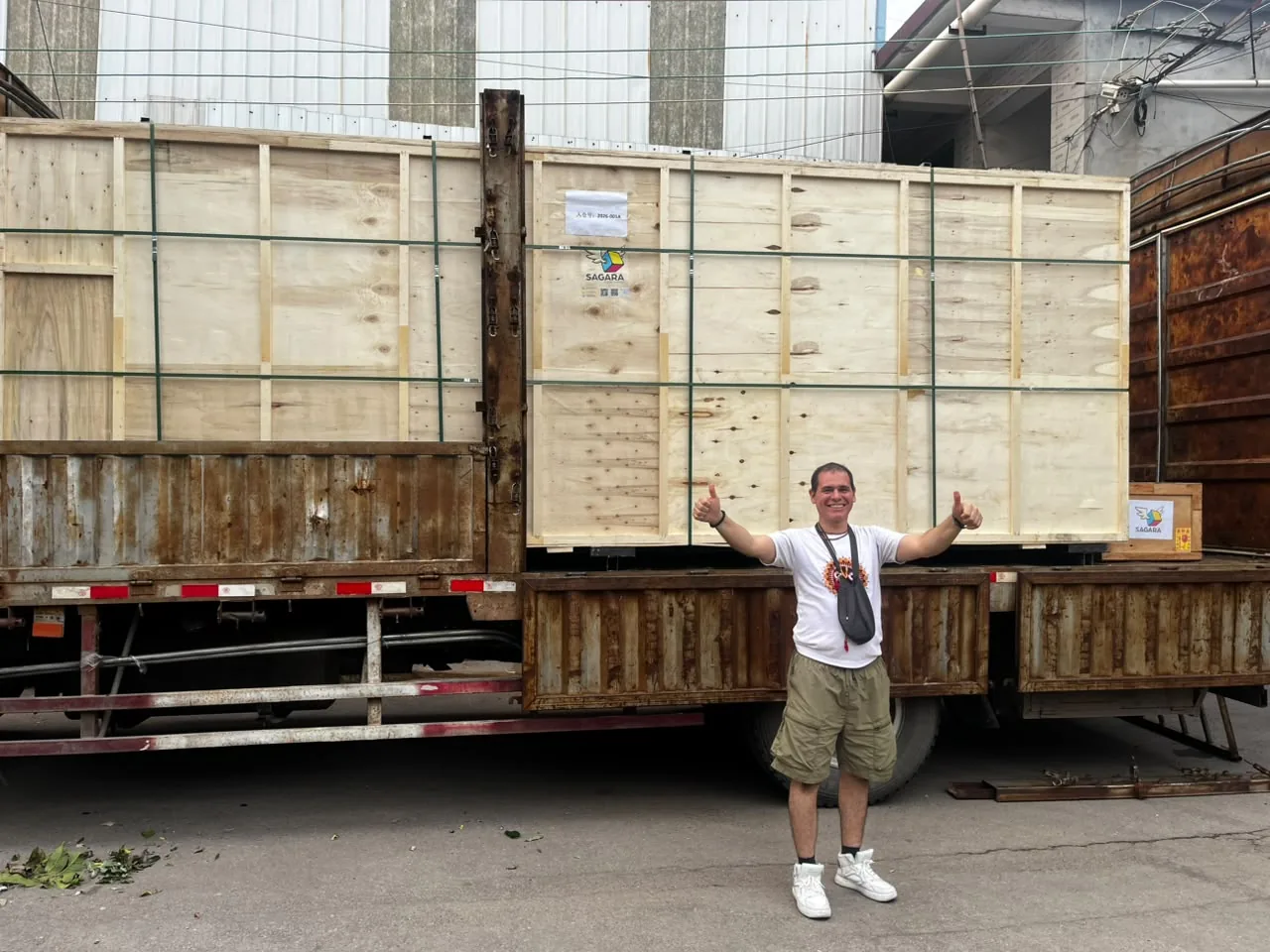
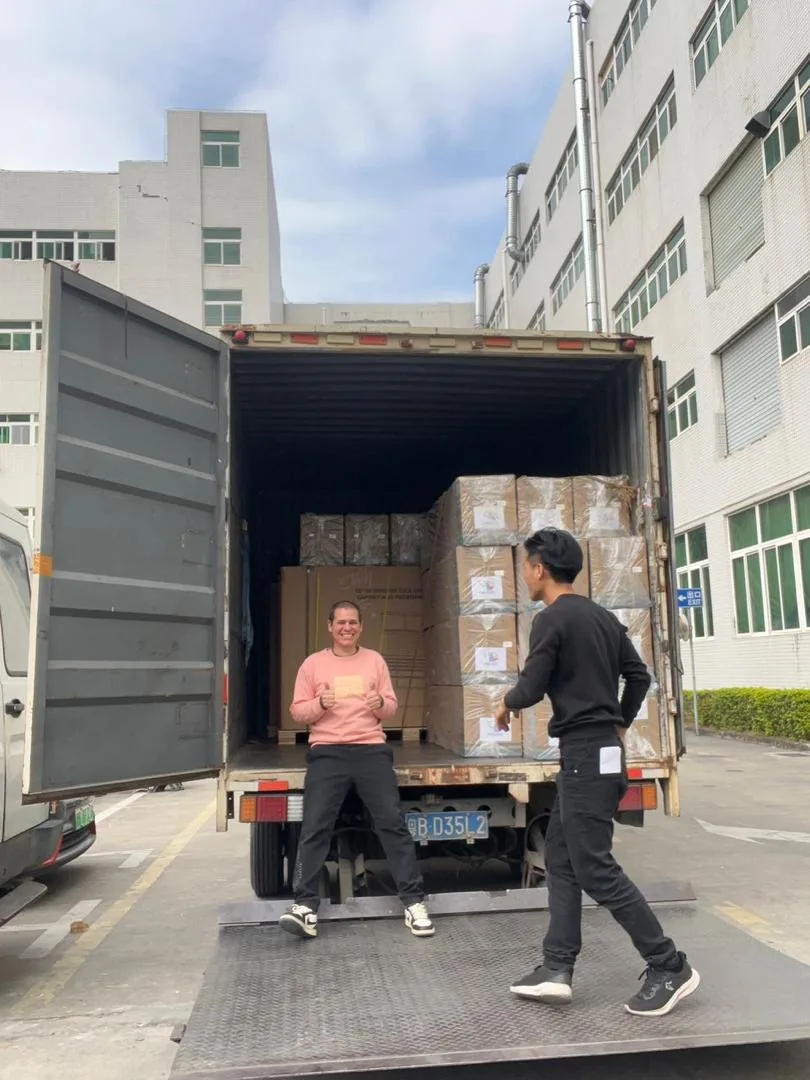
These aren't stock photos. That's Damodara, a SAGARA partner, at the factory and on the truck on dispatch day. That is the whole difference between a middleman and someone who answers.

Loading the truck at the factory door, counting every package.
At the factoryLoading the truck at the factory door, counting every package.
Checking the marking on each box before it goes on the truck.
MarkingChecking the marking on each box before it goes on the truck.
Palletised goods ready, with the forklift waiting.
PalletisedPalletised goods ready, with the forklift waiting.
Closing the wooden crate, SAGARA logo sealed on the lid.
CrateClosing the wooden crate, SAGARA logo sealed on the lid.
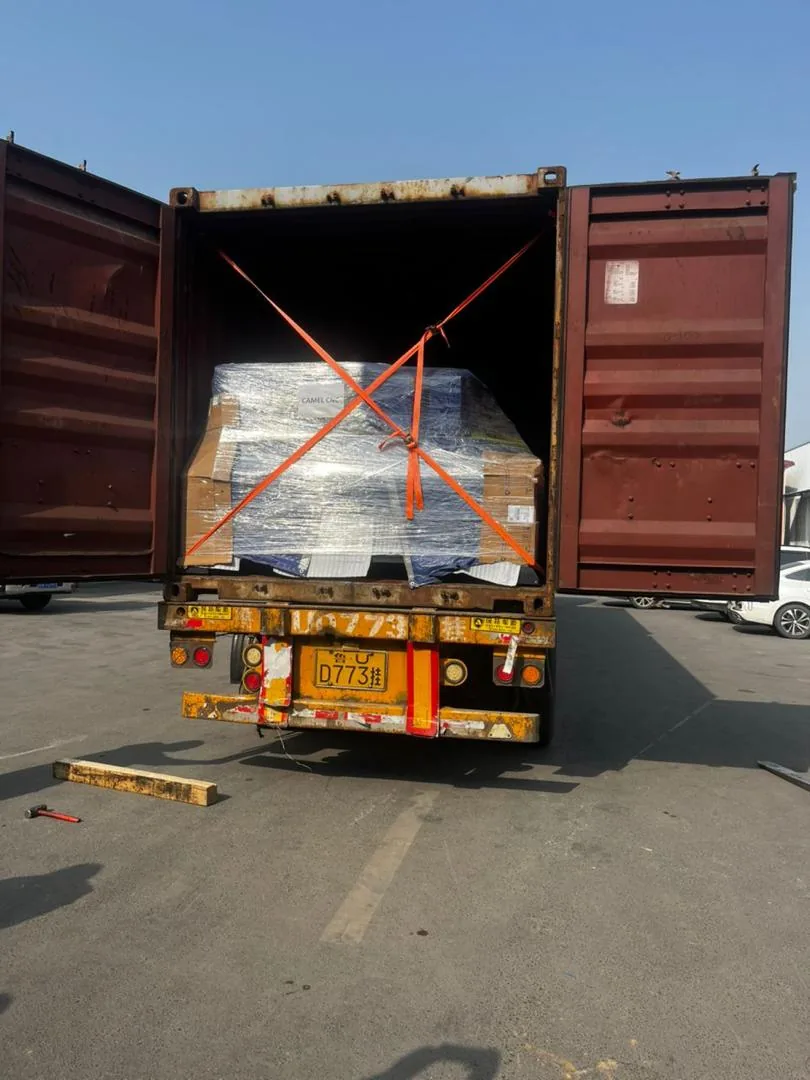
Container loaded, strapped and ready to seal.
ContainerContainer loaded, strapped and ready to seal.
Truck loaded at the plant, before leaving for the port.
DepartureTruck loaded at the plant, before leaving for the port.

Not only heavy machinery

Same process,
any product.

A fibre laser cutter, a plotter, construction materials or a container of kitchens: the packing changes, the standard doesn't.

Cutting test before shipping · fibre laser machine

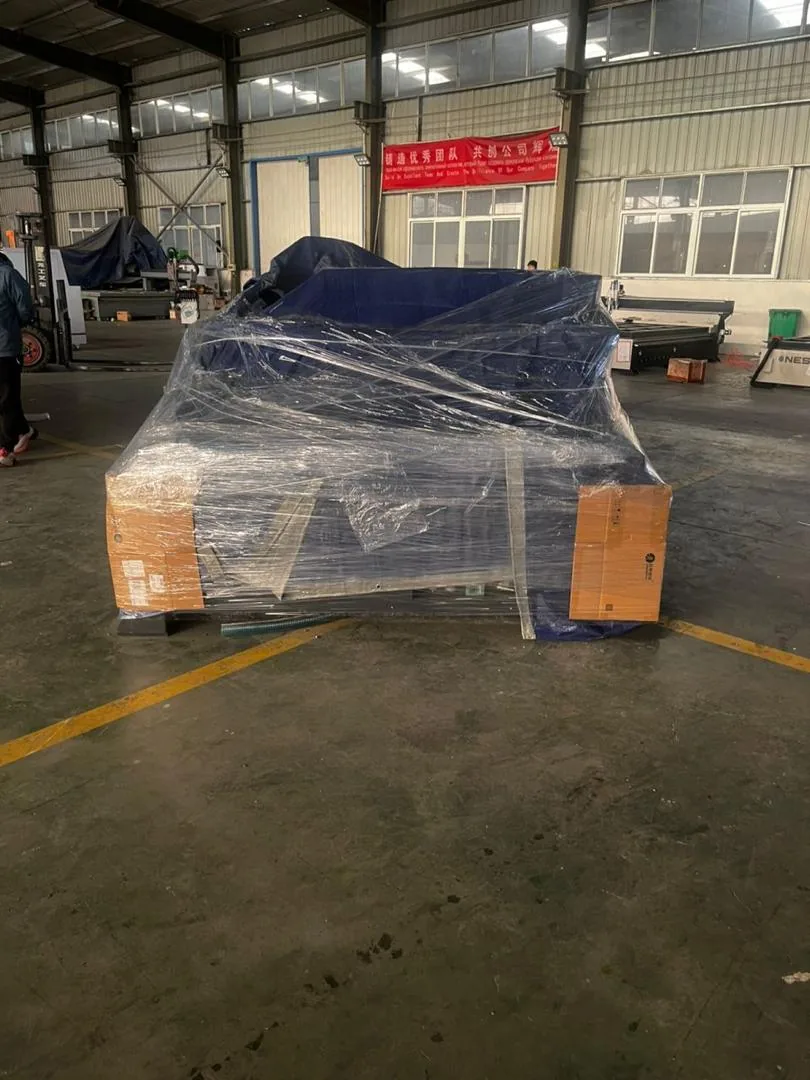
Industrial equipment wrapped and palletised, ready for the container.
ProtectedIndustrial equipment wrapped and palletised, ready for the container.
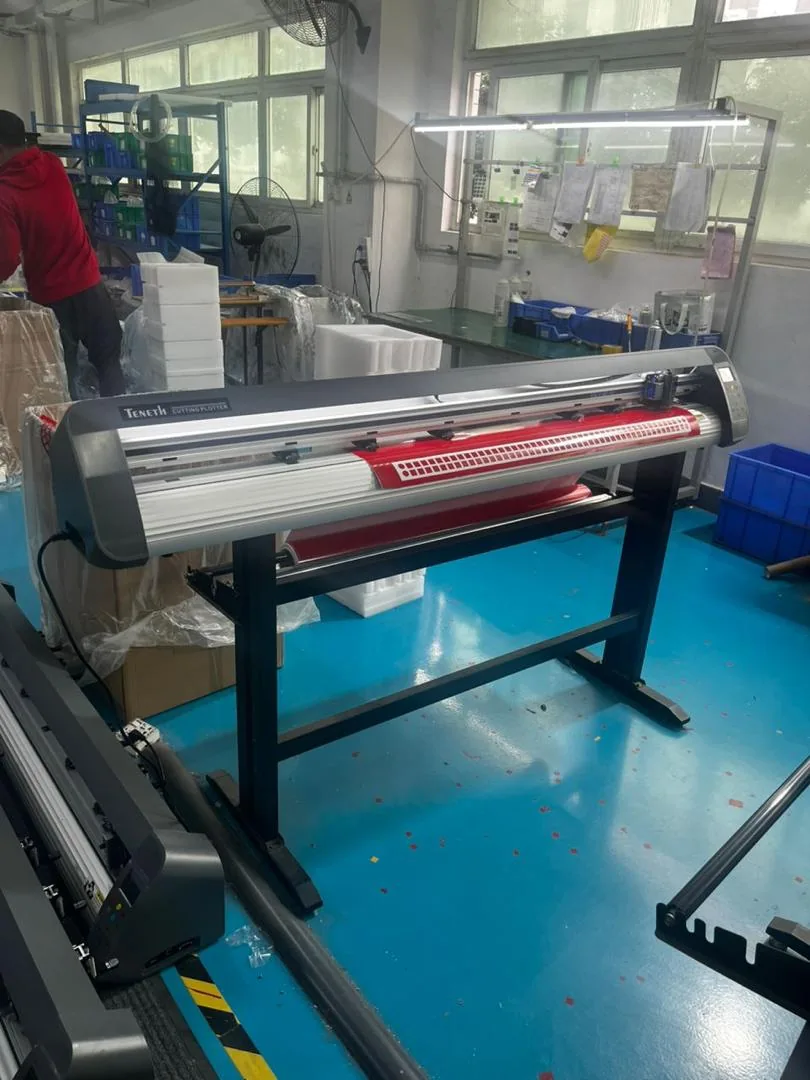
Cutting plotter assembled and tested at the plant before packing.
TestedCutting plotter assembled and tested at the plant before packing.
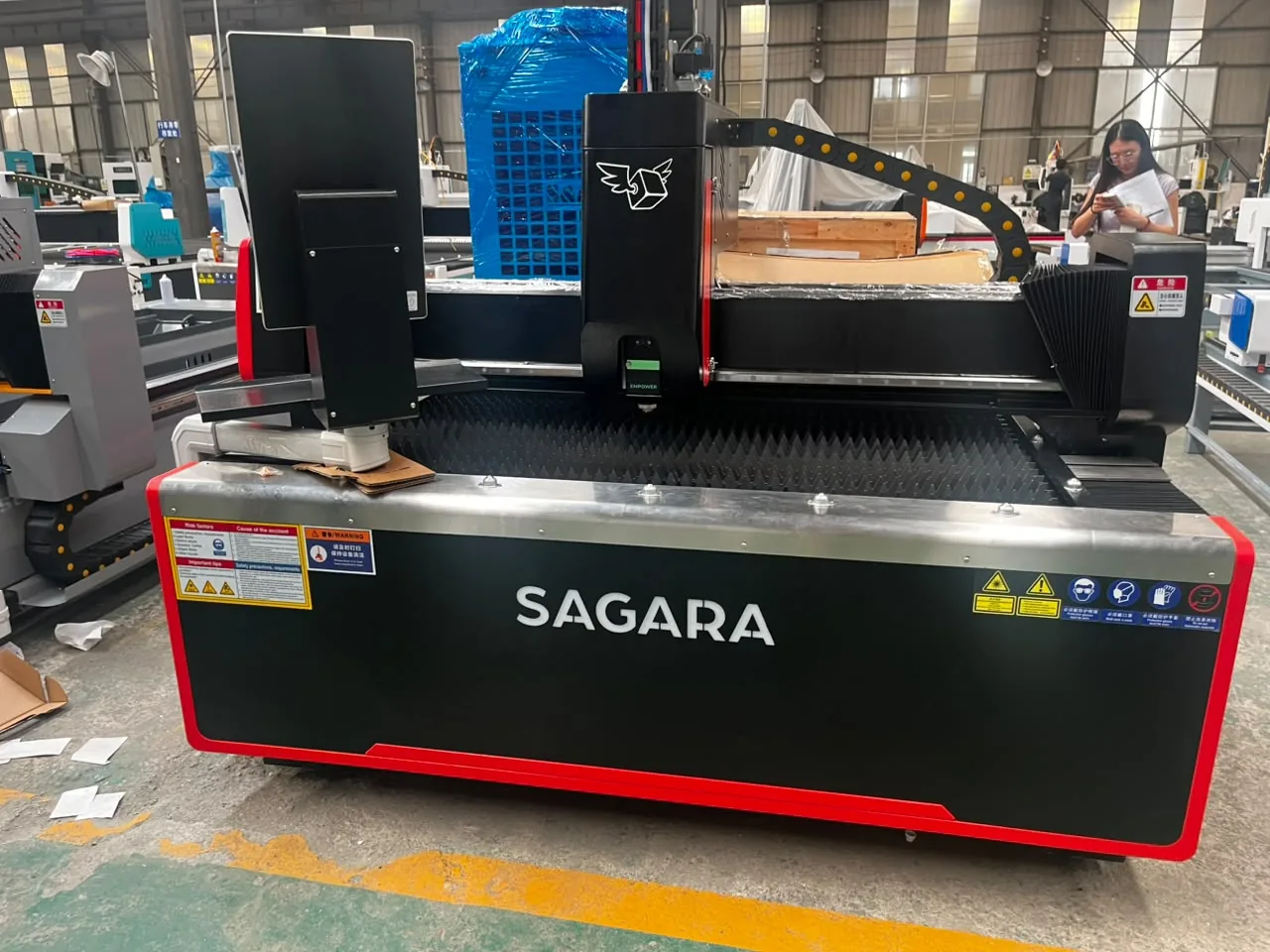
Cutting machine under our own SAGARA brand, leaving the factory.
Own brandCutting machine under our own SAGARA brand, leaving the factory.

Why we film all of this

Because buying from China at a distance is, above all, a trust problem. It isn't solved with promises: it's solved by showing what happens when the client isn't watching.

Every order that leaves carries its own photo record: the machine tested, the packing closed, the container loaded and the seal on. If something arrives different, there's something to claim with.

What this saves you

  • Port holds over soil or untreated timber.
  • Transit damage from loose or badly protected cargo.
  • Slow clearance from paperwork that doesn't match what's inside.
  • Arguments without evidence when something doesn't add up on arrival.

FAQ

Why does machinery have to be washed before shipping?

Biosecurity. Countries such as New Zealand and Australia inspect used machinery for soil, seeds and organic residue, and hold the container if they find any.

Pressure washing at origin, undercarriage included, avoids the whole problem. It costs far less than a fumigation and days of port storage.

Do you send photos of my cargo before it leaves?

Always. We photograph the finished product, the packing and the loaded container before sealing it.

It's your documentary evidence if anything looks different on arrival, and for us it's how we prove the work was done.

Who builds the wooden crate and what does it cost?

The factory or a packing workshop, depending on the product, and the cost is included in the quote from the start.

The timber must be treated and marked to the international ISPM-15 standard, or destination customs can reject it.

Can you handle it if I already bought on my own?

Yes. Plenty of clients arrive with goods already paid for and stuck at the factory. We can go, verify what's actually there, organise the packing and get it out.

It costs more than doing it right from the start, but it beats losing the order.

WhatsApp